 MetaMask
 BitGo
BitGo Trust Wallet
 Coinbase
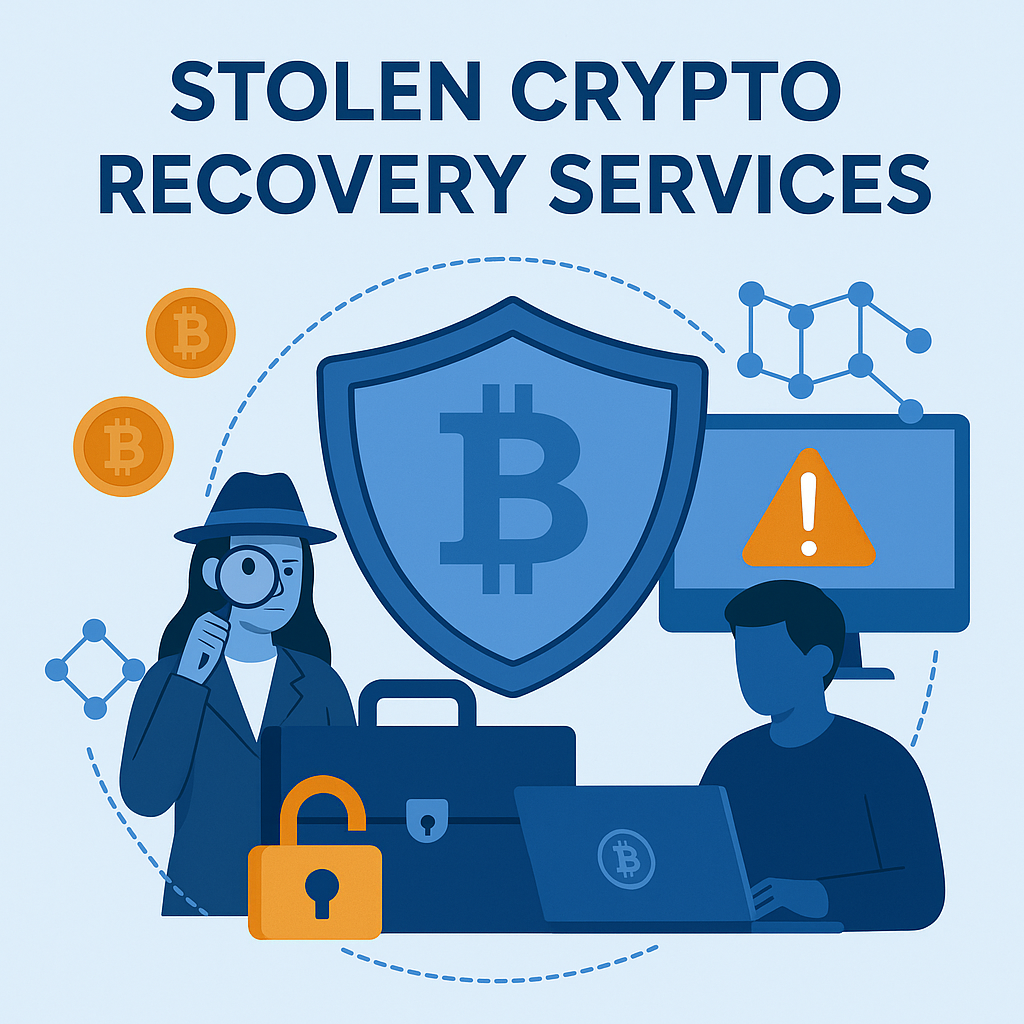
Stolen Crypto Recovery Services: How to Recover What Was Taken (Realistically)
Stolen Crypto Recovery Services: How to Recover What Was Taken (Realistically)
Introduction
Losing crypto to theft is one of the most gut-punching experiences in the digital era. Beyond the financial loss, victims routinely report shame, anger, and a fierce need to act — now. Enter stolen crypto recovery services: firms and specialists who attempt to trace, freeze, and sometimes recover stolen digital assets. But not every “recovery” offer is legitimate, and realistic expectations are essential.
This guide explains how genuine stolen crypto recovery services work, what they can actually achieve, warning signs of scams, and a clear playbook you can follow if you or someone you know has been breached.
Contact us here if you want to recover your crypto: CONTACT US
What Are Stolen Crypto Recovery Services?
Stolen crypto recovery services are professional teams that combine blockchain forensics, legal processes, and exchange liaison to locate stolen funds and, where possible, recover them. Core capabilities usually include:
- Blockchain transaction tracing (following coins across wallets and chains).
- Identifying whether stolen funds hit centralized exchanges or mixers.
- Preparing forensic reports for law enforcement or legal action.
- Coordinating with exchanges and regulators to request freezes or disclosures.
- Liaising with legal counsel to initiate subpoenas or civil claims.
These services are distinct from wallet-unlock experts (who recover access to wallets you still own) — stolen crypto recovery focuses on funds someone else illegally controls.
Contact us here if you want to recover your crypto: CONTACT US
How Stolen Crypto Recovery Actually Works (Step-by-Step)
- Immediate Triage & Evidence Collection
Victims provide transaction IDs (TXIDs), wallet addresses, timestamps, and all communications. Time is crucial: the faster you share details, the better the chances. - Blockchain Forensics
Investigators use industry tools (Chainalysis, Elliptic, TRM, etc.) to map where funds flowed — spotting patterns, exchange deposit addresses, and mixing behavior. - Exchange & Custodian Outreach
If funds reach a regulated exchange, compliance teams can be asked to freeze accounts — but they typically require a formal legal request or law enforcement involvement. - Legal Escalation
Lawyers file subpoenas, injunctions, or criminal complaints. Cross-border cases may require mutual legal assistance or cooperation via Interpol/Europol. - Negotiation or Asset Recovery
In rare cases where funds can be identified on an exchange, recovery may involve asset freezes, civil suits, or negotiated settlements. Often, only partial recovery is possible. - Reporting & Documentation
A forensic report is compiled for the victim, law enforcement, insurers, or courts — useful even when funds aren’t recovered.
What Stolen Crypto Recovery Services Can — and Can’t — Do
They can:
- Trace the flow of stolen funds across public ledgers.
- Locate points where coins touched centralized exchanges.
- Produce evidence useful for law enforcement and civil litigation.
- Sometimes get partial funds frozen or recovered via legal orders.
They can’t (realistically):
- Guarantee full recovery — no legitimate firm will promise this.
- Reverse on-chain transactions by itself (there is no “undo” button).
- Recover funds that have been quickly laundered through privacy mixers or converted off-chain in uncooperative jurisdictions.
Contact us here if you want to recover your crypto: CONTACT US
Red Flags: How to Spot Recovery Scams
Victims are prime targets for follow-up scams. Beware services that:
- Demand your 12-word recovery phrase or private keys. (Never share these.)
- Promise “100% guaranteed recovery” or “instant refunds.”
- Ask for large upfront fees with no written contract or proof of capability.
- Use pressure tactics or limited-time offers to force quick payment.
- Have no verifiable business registration, legal partners, or case history.
A legitimate stolen crypto recovery service will request evidence, explain limitations, involve lawyers, and provide a written agreement.
How to Choose a Legitimate Stolen Crypto Recovery Service
Use this checklist when vetting firms:
- Proven tools & methods: Do they reference recognized forensic platforms?
- Legal partnerships: Is there a crypto recovery lawyer or law firm partner?
- Transparency: Clear fee structure, documented process, and no guaranteed claims.
- References or case studies: Can they show anonymized examples or media mentions?
- Data protection: Secure communication, NDAs, and encrypted evidence transfer.
- No seed phrase requests: They should never ask for private keys.
Ask direct questions: What tools do you use? Will you work with law enforcement? What is your RECOVERY success rate for cases like mine? If answers are vague — walk.
Contact us here if you want to recover your crypto: CONTACT US
Immediate Action Plan if Your Crypto Was Stolen (Playbook)
- Do not send any more funds to unknown addresses.
- Preserve all evidence: TXIDs, wallet addresses, screenshots, emails, IP info, timestamps.
- Contact the receiving exchange immediately, if you can identify one. Ask to open a fraud/compliance ticket.
- Report to law enforcement: provide the forensic report or detailed evidence. In the U.S., file with IC3; in the U.K., report to Action Fraud; use national cybercrime portals elsewhere.
- Engage a vetted stolen crypto recovery service that works with lawyers — but verify them first.
- Consider legal action — a lawyer can issue subpoenas to exchanges and help pursue civil remedies.
- Protect remaining assets — move unaffected crypto to cold storage; enable 2FA and review security hygiene.
Pricing Models & What to Expect on Fees
Common fee structures include:
- Retainer + success fee: A smaller upfront retainer to start tracing, plus a contingency percentage on recovered funds.
- Flat forensic fee: For the investigation/report only (useful if you need evidence for law enforcement).
- Hourly legal fees: If litigation is required.
Avoid firms demanding huge upfront payments with no accountability. Ethical providers align incentives: you pay more only if they recover assets.
Frequently Asked Questions (Short Answers)
- Can stolen crypto always be recovered? No. Success depends on traceability, speed, and exchange cooperation.
- Will law enforcement recover my coins for me? Sometimes — but often only when evidence points to a quickly seizable endpoint. Recovery firms increase the chance by delivering actionable intelligence.
- Should I ever give my seed phrase to a recovery service? Never. No legitimate recovery requires it.
- How long does recovery take? Weeks to months; complex cross-border cases can take years.
Contact us here if you want to recover your crypto: CONTACT US
Final Thoughts: Hope, But Be Realistic
Stolen crypto recovery services are a legitimate, evolving industry that provides victims with capability they otherwise lack. They give you data, legal pathways, and sometimes results. But recovery is rarely instant or total. The best approach is disciplined: act fast, document everything, work with legal partners, and vet any service rigorously.
If you choose to pursue recovery, do so with both optimism and caution — the right team can increase your chances of getting some — or all — of your assets back, and more importantly, can help stop criminals from hurting others.
Contact us here if you want to recover your crypto: CONTACT US